
The Nihang Singh Traditions - The Warrior Sikhs
Thursday, 9 December 2010


Monday, 29 November 2010
Thursday, 11 November 2010
A reflection on 'Remembrance: The Sikh Story'
http://www.bbc.co.uk/programmes/b00vys5t
'Remembrance: The Sikh Story' narrated the sacrifices of the Sikh Khalsa Panth for the Sovereignty of Great Britain, and Europe by around 83, 000 lives of Singhs, and another 120, 000 Singhs who were wounded. It was a great program, and I really enjoyed it. It touched on some areas that I feel we need to reflect upon as a Qaum. On the whole the program was brilliantly made.'John' Deol and 'Tommy' Nagra have done a wonderful job.
Our nation is and was made of Saint-Soldiers and has always given lives for the truth and justice. I reluctantly ask the question, is that what the modern wars are about? Is Sadam Hussein's regime now on the shores of Britain? World war 1 and 2 were against a facist regime, that was attacking and colonialising other nations. This is clearly not the case now. As Sikhs is it Dharamic for us to get involved in wars that are clearly about oil? We believe in Dharam Yudh, not invasion. Sikhs have rarely attacked first, but defended themselves. Is taking out political regimes a part of our identity?
My second reflection is that the British colonial regime banned the Sri Sahib in Punjab, the colour blue, all symbols of the Khalsa, and disarmed the population. While at the same time, reinforcing the warrior ideal in the British regiments. Let us not lie to ourselves, the Sikh Panth suffered tremendously under colonialism. Jalliawala Bagh is just one example of this, which was only touched upon in the documentry. The Sikh identity was attacked via the meddling in Panthic affairs by the British administration of Punjab. Many Sikhs died in the Anglo-Sikhs wars, and many great Sikhs died in British prisons in Rangoon and other places. Our Royal King was brought to the UK and converted to Christianity and our Queen Mother Maharani Jindan Kaur died in exile from her homeland.
Many people are also unware that after the first Anglo-Sikh war 1845-46, the Nihang Singh priests at the Akal Takht sahib were killed in cold blood, by the British armies. This is supported by news articles. See the paragraph 'The Akalis Tower, Umritzir'.
http://www.archive.ukpha.org/archives/akalis-tower-at-umritzir-from-a-drawing-by-w-carpenter
The events of 1984 has scared the Panth with a deep rooted pain of the terrible attrocities the Government of India commited against the Sikh nation. Each year we remember the attack with tears in our eyes. How do we feel living in country that did exactly the same when it invaded the Punjab? Personally, it makes me feel a little uncomfortable.
If the British respected our Qaum, why was our country split into two? Even after we gave our lives. Look at the millions who died in the partition, while the colonialists sat back and watched - 1 million people died. Sikhs lost their most sacred shrines.
Still I am proud of being a British citizen and appreciate the positive aspects of this society, like multi-culturalism, etc. However we cannot lie, this country has the blood of literally millions of people on its hands. We as Sikhs need to exert our influence and should encourage the government of Great Britain to develop a real sense of fairness, justice and Dharam, rather than carry out illegal wars, based on 'WMD.' Did the Sikhs give a press release when the war started in Iraq? While Guru Nanak's protest to Babbar are still in Adi Guru Granth Sahib ji.
My other reflections are actually about the program, firstly it wasn't long enough, or should have been over two parts. With more time they could have narrated a battle sequence just to show how brave the Singhs were, who gave their lives for this country, in order to defeat the fascists. The other point was there was only one expert on the Anglo-Sikh wars, Amarpal Singh Sidhu.
These are just a few of my reflections, no offence meant to anybody.
Kamalroop Singh
'Remembrance: The Sikh Story' narrated the sacrifices of the Sikh Khalsa Panth for the Sovereignty of Great Britain, and Europe by around 83, 000 lives of Singhs, and another 120, 000 Singhs who were wounded. It was a great program, and I really enjoyed it. It touched on some areas that I feel we need to reflect upon as a Qaum. On the whole the program was brilliantly made.'John' Deol and 'Tommy' Nagra have done a wonderful job.
Our nation is and was made of Saint-Soldiers and has always given lives for the truth and justice. I reluctantly ask the question, is that what the modern wars are about? Is Sadam Hussein's regime now on the shores of Britain? World war 1 and 2 were against a facist regime, that was attacking and colonialising other nations. This is clearly not the case now. As Sikhs is it Dharamic for us to get involved in wars that are clearly about oil? We believe in Dharam Yudh, not invasion. Sikhs have rarely attacked first, but defended themselves. Is taking out political regimes a part of our identity?
My second reflection is that the British colonial regime banned the Sri Sahib in Punjab, the colour blue, all symbols of the Khalsa, and disarmed the population. While at the same time, reinforcing the warrior ideal in the British regiments. Let us not lie to ourselves, the Sikh Panth suffered tremendously under colonialism. Jalliawala Bagh is just one example of this, which was only touched upon in the documentry. The Sikh identity was attacked via the meddling in Panthic affairs by the British administration of Punjab. Many Sikhs died in the Anglo-Sikhs wars, and many great Sikhs died in British prisons in Rangoon and other places. Our Royal King was brought to the UK and converted to Christianity and our Queen Mother Maharani Jindan Kaur died in exile from her homeland.
Many people are also unware that after the first Anglo-Sikh war 1845-46, the Nihang Singh priests at the Akal Takht sahib were killed in cold blood, by the British armies. This is supported by news articles. See the paragraph 'The Akalis Tower, Umritzir'.
http://www.archive.ukpha.org/archives/akalis-tower-at-umritzir-from-a-drawing-by-w-carpenter
The events of 1984 has scared the Panth with a deep rooted pain of the terrible attrocities the Government of India commited against the Sikh nation. Each year we remember the attack with tears in our eyes. How do we feel living in country that did exactly the same when it invaded the Punjab? Personally, it makes me feel a little uncomfortable.
If the British respected our Qaum, why was our country split into two? Even after we gave our lives. Look at the millions who died in the partition, while the colonialists sat back and watched - 1 million people died. Sikhs lost their most sacred shrines.
Still I am proud of being a British citizen and appreciate the positive aspects of this society, like multi-culturalism, etc. However we cannot lie, this country has the blood of literally millions of people on its hands. We as Sikhs need to exert our influence and should encourage the government of Great Britain to develop a real sense of fairness, justice and Dharam, rather than carry out illegal wars, based on 'WMD.' Did the Sikhs give a press release when the war started in Iraq? While Guru Nanak's protest to Babbar are still in Adi Guru Granth Sahib ji.
My other reflections are actually about the program, firstly it wasn't long enough, or should have been over two parts. With more time they could have narrated a battle sequence just to show how brave the Singhs were, who gave their lives for this country, in order to defeat the fascists. The other point was there was only one expert on the Anglo-Sikh wars, Amarpal Singh Sidhu.
These are just a few of my reflections, no offence meant to anybody.
Kamalroop Singh
Friday, 5 November 2010
Account of the Akali Nihangs by Macauliffe 1881
 The Akalis are the most enthusiastic members of the Sikh faith. Their origin dates from the time of the tenth and last Guru. Their name is derived from one of the epithets of God, Akal,* the eternal or immortal, a word which they are supposed to frequently ejaculate. They wear a blue dress and lofty turbans which they call dumbala or high-tailed. These turbans are ornamented with steel discs or quoits, daggers, and knives. The Akalis appear to employ their turbans as our ladies employed chatelaines a few years ago, namely, to carry handy domestic article of frequent use. In au Urdu paper prepared far me by one of the chief priests of the temple, the Akalis are styled the most ignorant, cruel, and rapacious of the followers of Gobind Singh. But they would, in case of necessity, prove brave and determined soldiers, and devote themselves to death as of yore in the cause of the holy Khalsa. Most of them professedly adopt celibacy in which, however, chastity is not always au appreciable factor. And the few who are married are not capable either by their influence or the purity of their lives of retrieving the reputation of their much defamed monkish brethren.
Authorities differ as to the origin of the blue dress. One writer states that the blue dress is an imitation of the blue dress of Krishna, the well-beloved shepherd-god of the forest of Brindraban. Another states that the blue dress was adopted in imitation of Guru Gobind, who by means of it escaped from his enemies. In the time of the Emperor Auraugzeb, Gobind was closely and dangerously pursued by the imperial troops iuto the fortress of Chamkaur. He succeeded by the aid of a dark night and the gratitude of two Mughal soldiers in escaping to Bahlolpur. Here, too, his safety was not assured, and, donning the blue dress of a Mecca pilgrim and personating the Musalman priest of Uch, he made his way to the wastes of Bhatinda. It may, however, be here mentioned, that long before Muhammad appeared in the world, blue was a sacred color among the Egyptians and Hebrews. The blue costume which travellers remark worn by natives of Egypt at the present day, is as old as the Pharaohs.*

In most of the exoteric observances of the Sikhs a deep purpose may be traced. When fighting was part of a Sikh's duty, it was deemed necessary that his head should be properly protected with steel rings; and long hair with knives concealed in it protected that part of the person from sword-cuts. The kachh, or drawers, fastened by a waisthand, was more convenient and suitable for warriors than the insecurely tied sofa of general Indian wear. A Sikh's physical strength was kept intact by the use of meat dreaded by the Hindus ; and, the better to assist in this object, he was enjoined to abstain from the pernicious drugs, tobacco and bhang, then so freely consumed by both Hindus and Musalmaus.

Among the religious orders of the Sikhs in the Panjab, the Akalis may be said to preserve whatever remain of the customs of the last Guru. When they marry, they do not, like the other Sikhs, call a Brahmin to perform the nuptial ceremony. A Sikh priest is summoned. He reads the Anand, or epithalaminm, composed by Guru Arjan Das. A sis then thrown over the bride and bridegroom, the well-known chadar dalana marriage ceremony of the Panjab. The holy Granth is used as awitness on the occasion, instead of fire, which is an invariable concomitant of Hindu marriage ceremonies. Karaparshad is then offered to the Granth, and distributed among the guests, after which the ceremony is complete.
The Sikh priest who has favoured me with this information, considers this marriage knot superior to the elaborate one of the Hindus. It is cheap, simple, and equally efficacious! Not only in the matter of marriage, but of other ceremonies also, is the Akali still more intelligent than his co-religionists. He does not, by piercing his ears and wearing ear-rings, render himself effeminate, or give a handle of attack to his enemies if ever engaged in close combat. When any of his friends dies, he does not call a Brahmin to read the mortuary service, or heap upon him a large recompense for his idle ministrations. The Akali, instead of this, bestows alms on poor Sikhs, and he collects his friends to read the Granth with him, and pray that the soul of his deceased relation may be speedily relieved from transmigrations.
The strictest of the Akalis have acquired the epithet Bibekis the discriminating, or the conscientious. These have engrafted all the prejudices of Hinduism on the bigotry of the Akalis. With all the irrational asceticism of the Vaishnu sect of Hindus, the Bibekis will not eat flesh or even partake of any article of food or drink which they have not prepared with their own hands. To such au extent is this carried, that they will not even taste food cooked by their wives, eat fruit purchased in the market, or drink water which they have not themselves drawn from the well. They consider it a sin to eat bare-headed, and will pay a fine (tankhah) to the temple if they do so even inadvertently. They do not remove hair from any part of their persons. For the Hindu janeo, or Brahminical thread, they wear a sword. They are very strict in wearing the five articles of Sikh dress, whose names begin with a K. They will not drink water without immersing in it a knife or dagger. And, with an irrational mixture of spiritual pride and spiritual humility, they think themselves equal to the tenth spiritual king, Gobind, while at the same time they acknowledge themselves his disciples.

The asceticism of this class not only extends to these bigoted observances, but also to their ordinary conversation. They add the word " Singh," which is peculiar to the Sikh religion, as an affix to all substantives and sometimes to other parts of speech. For instance, instead of saying, '' Put the inkstand on the table," they say " Put the inkstand Singh on the table Singh." Another verbal peculiarity of theirs may be mentioned. It is well known that in Hindustani, as in French and Italian, all substantives are either masculine or feminine. The Bibekis, with pharisaical ostentation, never use a word of the feminine gender. If an object can only be expressed by one word which is feminine, they alter its distinctive termination. Thus the word kanghi, a comb, in such frequent use among the Sikhs who religiously wear long hair, is grammatically feminine ; but when a Bibeki has occasion to use the word, he says Kangha, changing the final feminine into a masculine vowel, thus altering the gender of the word, and religiously and prudently preserving himself "from the contact or presence of even feminine substantives.
Some of the Akalis call themselves Nihangs. It is said, that one day there appeared before the tenth Guru an Akali in a lofty turban to which were attached miniatures of all the weapons of warfare employed at that period. The Guru was pleased and said, that the man looked like a nihang or crocodile. The Guru saw that the turban gave a ferocious appearance to the religious warrior, and forthwith recommended it to his followers. The high-peaked turbans of the Nihanga are said by others to have had their origin in one of the marauding expeditions of Zama'n Shah against the Sikhs. The latter on one occasion were few in number and unable to cope in fair fight with their adversaries. They therefore put on the high-peaked turbans of the Turki soldiers, went armed among them at night, and completely destroyed them. The high turban was therefore permanently adopted as an auspicious article of costume. A third more probable account, however, is that on which the Sikh priests themselves appear to be generally agreed, namely, that the custom of wearing high-peaked turbans was first adopted in the time of Ranjit Singh. Phola Singh, a man of prodigious stature, used to sit daily in the balcony of the Akal Bunga. His gigantic size appeared enhanced by his high-peaked turban ; and his advice and example induced other Akalis to adopt a similar head-gear. It soon became one of the distinctive articles of dress of their order.
The more insolent of the Akalis and those addicted to the use of intoxicating drugs, appear to have appropriated to themselves the designation Nihang. The word is in such bad odour in other parts of the Panjab, that a man is styled a Nihang who has taken to vicious ways and bad livelihood. All European travellers in the Panjab during the Sikh regime have complained of the gross insolence, and in some cases of the foul language or maledictions employed by these Nihanga, or Akalis, to Christians. No such thing has, I believe, ever been witnessed in recent times. Several of the Akalis still have, no doubt, a defiant air, but all of them with whom I have conversed I found uniformly courteous and civil.
Saturday, 30 October 2010

Monday, 25 October 2010
Tuesday, 31 August 2010
An account of the Khalsa by the Frenchman Polier 1776
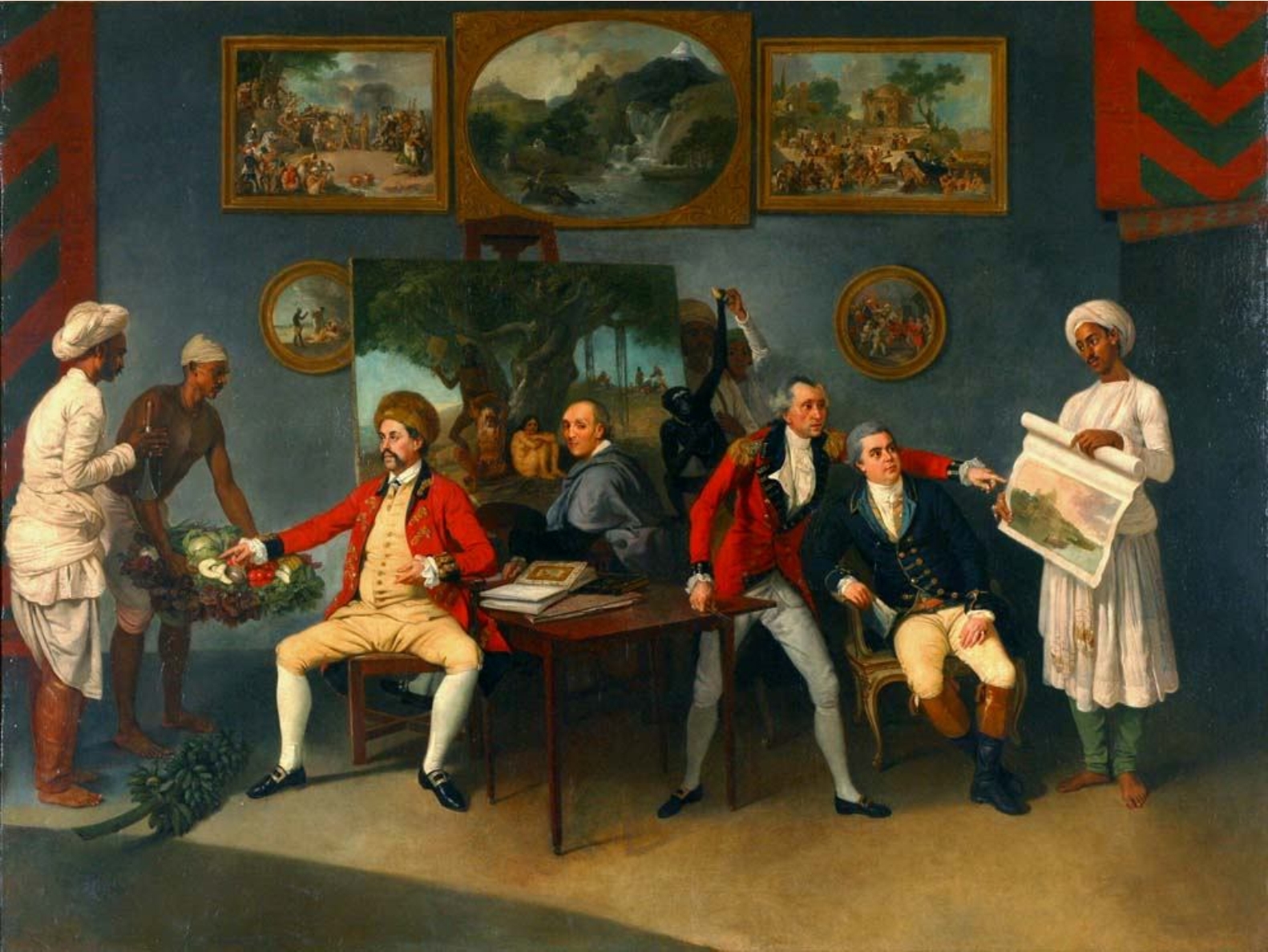
As for the Seiks, that formidable aristocratical republic, I may safely say, it is only so to a weak defenceless state, such as this is. It is properly the snake with many heads. Each zemindar, who, from the Attock to Hansey Ifsar the gates of Delhi, lets his beard grow, cries -wah goro, eats pork, wears an iron bracelet, drinks bang, abominates the smoking of tobacco, and can command from ten followers on horseback to upwards, sets up immediately for a Seik sirdar; and, as far as is in his power, aggrandises himself at the expence of his weaker neighbours; if Hindu or Mussalam much the better; if not, even amongst his own fraternity will he seek to extend his influence and power; only with this difference, in their intestine divisions, from what is seen every where else, that the husband, man and labourer, in their own districts, are perfectly safe and unmolested, let what will happen round about tbyvm.
'From this small sketch it may be easily conceived that the Stiles are much less formidable than they are represented. It is true that they all join together when invaded, as was the case when Abdallah passed through their country. But, notwithstanding they had assembled an immense body of cavalry, extremely well mounted, yet they never presumed to make a single charge on the Duranny army, or even on detachments ; and, considering their irregularity and want of discipline and subordmation, it was well for them, I think, they did not. They satisfied themselves in making a kind of hussar war of it, cutting off stragglers, and intercepting provisions. In this they excel. To say the truth, they are indefatigable; mounted on the best horses that India can afford, each carries a matchlock of a large bore, which they handle dexterously enough, and with which they annoy considerably, avoiding at the same time going in large bodies, or approachmg too near. Such is their way of making war, which can only appear dangerous to the wretched Hindustan troops of these quarters, who tremble as much at the name of a Seik as people used to do, net long ago, at the mention of Mahrattas. But what its more to be admired, those Seik sirdars, whose territories border on the king's, were but lately zemindars of the Jauts, and of their cast or tribe, under which denomination had they remained no one would have thought of them; but, now they have put on the iron bracelet, fifty of them are enough to keep at bay a whole battalion of the king's forces, such as they are. This shews the force of prejudice, and the value of military reputation. Such are the immediate neighbours of the king.
' Five hundred of Nujhaf Khan's horse dare not encounter fifty Seik horsemen ; and yet the last are as despicable a set of creatures as any that can be imagined. On the whole, was it not for Sombre's party, and Letafet's forces, Nujhaf Khan would not be able to stand his ground half an hour; and yet this is the Mighty Chief!'
'From this small sketch it may be easily conceived that the Stiles are much less formidable than they are represented. It is true that they all join together when invaded, as was the case when Abdallah passed through their country. But, notwithstanding they had assembled an immense body of cavalry, extremely well mounted, yet they never presumed to make a single charge on the Duranny army, or even on detachments ; and, considering their irregularity and want of discipline and subordmation, it was well for them, I think, they did not. They satisfied themselves in making a kind of hussar war of it, cutting off stragglers, and intercepting provisions. In this they excel. To say the truth, they are indefatigable; mounted on the best horses that India can afford, each carries a matchlock of a large bore, which they handle dexterously enough, and with which they annoy considerably, avoiding at the same time going in large bodies, or approachmg too near. Such is their way of making war, which can only appear dangerous to the wretched Hindustan troops of these quarters, who tremble as much at the name of a Seik as people used to do, net long ago, at the mention of Mahrattas. But what its more to be admired, those Seik sirdars, whose territories border on the king's, were but lately zemindars of the Jauts, and of their cast or tribe, under which denomination had they remained no one would have thought of them; but, now they have put on the iron bracelet, fifty of them are enough to keep at bay a whole battalion of the king's forces, such as they are. This shews the force of prejudice, and the value of military reputation. Such are the immediate neighbours of the king.
' Five hundred of Nujhaf Khan's horse dare not encounter fifty Seik horsemen ; and yet the last are as despicable a set of creatures as any that can be imagined. On the whole, was it not for Sombre's party, and Letafet's forces, Nujhaf Khan would not be able to stand his ground half an hour; and yet this is the Mighty Chief!'
Sunday, 15 August 2010
Va-hi-gu-ru!
Vahiguru is made up of four sounds - Va - hi - gu - ru.
This represents the name of the Divine in the four epochs:
Satyug: Vashdeva
Tretayug: Hari
Dvapuryug: Gobind
Kalyug: Ram
The four sounds come from four main chakra points.
Va: Mooladhara - Stomach and below
Hi: Anahata - The Heart
Gu: Vishudda - The Throat
Ru: Ajana - The centre of the eyebrows
Vahiguru is the ectasy of enlightenment, of completeness, - Ik Oankar - Oneness.
Vahi means great, wow, One, and is feminine
Guru means Divine teacher, Light, Consiousness, and is male
In terms of sound Va is long - hi is short
Gu is short - ru is long
This represents the name of the Divine in the four epochs:
Satyug: Vashdeva
Tretayug: Hari
Dvapuryug: Gobind
Kalyug: Ram
The four sounds come from four main chakra points.
Va: Mooladhara - Stomach and below
Hi: Anahata - The Heart
Gu: Vishudda - The Throat
Ru: Ajana - The centre of the eyebrows
Vahiguru is the ectasy of enlightenment, of completeness, - Ik Oankar - Oneness.
Vahi means great, wow, One, and is feminine
Guru means Divine teacher, Light, Consiousness, and is male
In terms of sound Va is long - hi is short
Gu is short - ru is long
Wednesday, 4 August 2010
Tuesday, 13 July 2010
Udasi - the ascetic Sikh by Guru Nanak

ਮਃ ੧ ਸੋ ਉਦਾਸੀ ਜਿ ਪਾਲੇ ਉਦਾਸੁ ਅਰਧ ਉਰਧ ਕਰੇ ਨਿਰੰਜਨ ਵਾਸੁ ਚੰਦ ਸੂਰਜ ਕੀ ਪਾਏ ਗੰਢਿ ਤਿਸੁ ਉਦਾਸੀ ਕਾ ਪੜੈ ਨ ਕੰਧੁ ਬੋਲੈ ਗੋਪੀ ਚੰਦੁ ਸਤਿ ਸਰੂਪੁ ਪਰਮ ਤੰਤ ਮਹਿ ਰੇਖ ਨ ਰੂਪੁ ੪
First Mehla:
so oudhaasee j paalae oudhaas
The Udasi, who embraces renunciation.
aradhh ouradhh karae nira(n)jan vaas
Sees the Immaculate One dwelling in both the upper and lower regions.
cha(n)dh sooraj kee paaeae ga(n)dt
balances the sun and the moon energies.
this oudhaasee kaa parrai n ka(n)dhh
The body-wall of such an Udasi does not collapse.
bolai gopee cha(n)dh sath saroop
Says Gopi Chand, the embodiment of Truth;
param tha(n)th mehi raekh n roop 4
the supreme essence of reality has no shape or form. 4
First Mehla:
so oudhaasee j paalae oudhaas
The Udasi, who embraces renunciation.
aradhh ouradhh karae nira(n)jan vaas
Sees the Immaculate One dwelling in both the upper and lower regions.
cha(n)dh sooraj kee paaeae ga(n)dt
balances the sun and the moon energies.
this oudhaasee kaa parrai n ka(n)dhh
The body-wall of such an Udasi does not collapse.
bolai gopee cha(n)dh sath saroop
Says Gopi Chand, the embodiment of Truth;
param tha(n)th mehi raekh n roop 4
the supreme essence of reality has no shape or form. 4
Subscribe to:
Posts (Atom)