ਸ੍ਰੀਵਾਹਿਗੁਰੂਜੀਕੀਫਤਹ

Showing posts with label Gurinder Singh Mann. Show all posts

Monday, 25 January 2016

The Guru’s warrior scripture by Kamalroop Singh and Gurinder Singh Mann

he scripture known as the Dasam Granth Sahib or the ‘Scripture of the Tenth King,’ has traditionally been attributed to Guru Gobind Singh. It was composed in a volatile period to inspire the Sikh warriors in the battle against the Moghuls, and many of the compositions were written for the rituals related to the preparation for war (Shastra puja) and for the battlefield. The verses generally consist of battle scenes and equate weapons with God, where the sword symbolises the victory of good over evil. War, according to the Tenth Guru, should only be a righteous war or dharam yudh, and it is true that the Sikhs throughout their history have been noted for their exemplary ethics in warfare. Guru Gobind Singh writes in his epic letter known as the Zafarnama that it is only justified to ‘raise the sword once all means have been exhausted.’ The compositions were written in mostly Braj Bhasha, and some smaller compositions are composed in Persian and Punjabi. In contrast to the primary Sikh scripture, the Adi Guru Granth Sahib, which is written in Shanti ras or verses that inspire peace, the Dasam Granth has a heroic strain of expression or Vir ras.
dasam granth 1
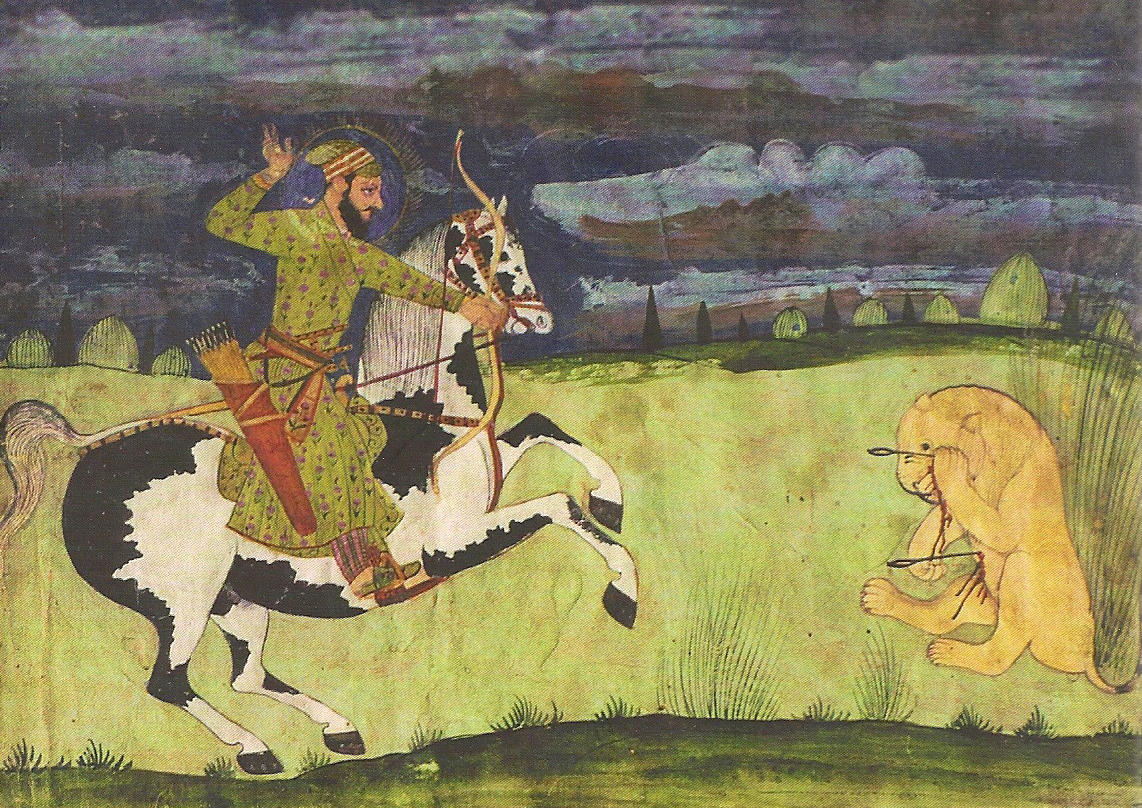
A portrait of the Tenth Guru hunting from the ‘Anandpuri’ recension of Dasam Granth from 1696 AD by Joginder Singh Ahluwalia. Used with permission.
In recent times, the Dasam Granth has been of much interest and volatile debate. This debate has its roots during colonialism in the Sikh reformist movement, known as the Singh Sabha. The most controversial and volatile discussion is that of the authorship, which is the most polemic and opinionated argu­ment that one could ever experience. Rather than being concerned with this issue of authorship, it is better that discussions are based on primary sources, like manuscripts and relics.
There is an intrinsic relationship of the scripture to the maryada (traditions), which includes the shastras (weapons), the Takhts (thrones of polity), and the warriors known as the Akali Nihangs. It is important to consider the historical context that the scripture was written in, and its link with battlefield sciences of the period. Whilst the primary scripture is now predominantly seen in Gurdwaras or Sikh temples across the world, during colonialism the Dasam Granth was removed from its ceremonial role, and it actual contents have been overshadowed by the rhetoric of reformist movements.
dasam granth 2
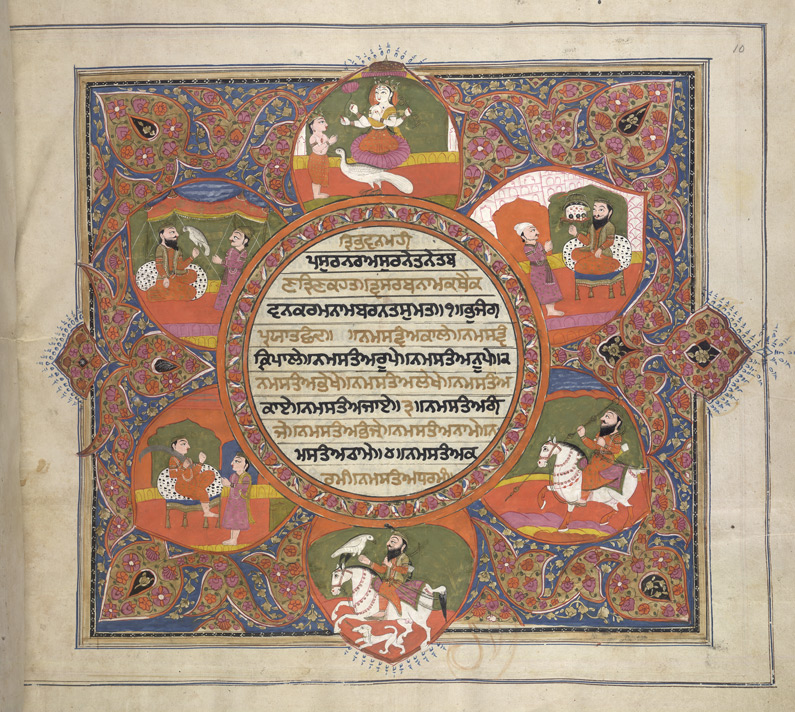
Illuminated frontispiece of the Dasam Granth, a scripture of Sikhism containing many of the texts attributed to tenth Sikh guru, Guru Gobind Singh (1666­1708). (Image credit: “Dasam Granth” from Or. 6298. © The British Library Board, used with permission.)
- See more at: http://blog.oup.com/2016/01/gurus-warrior-scripture/#sthash.eSGXVZPh.dpuf

Monday, 15 October 2012


Shiromani Khalsa Panth Akali Buddha Dal Panjva Takht: http://www.sikhscholar.co.uk/2012/10/shronmani-khalsa-panth-akali-buddha-dal.html


Sahib Singh Baba Joginder Singh the acting head of the Baba Buddha Dal has been in the UK visiting the sangat. He presided over Amrit Sanchar in London over the weekend and many Sikhs became Khalsa.

The Akali Nihangs the warrior vanguard of the Sikhs have been responsible for the upkeep of Gurdwaras, and responsible for the hard fought victories of the Khalsa panth. I was lucky to have the darshan of Singh Sahib Baba Joginder Singh Ji.


Singh Sahib Baba Joginder Singh and Gurinder Singh Mann

I asked Baba Ji several questions related to the Dasam Patshah ka Granth (Sri Dasam Granth Sahib), Baba Ji was graceful in answering them. He explained the importance of Dasam Bani and how both Granths were in prakāsh in Gurdwaras before the coming of the SGPC. He also spoke on Sri Sarbloh Granth (Granth of All-steel) and how this was an extension of the Sikh scriptures. He also explained about the days when Sri Dasam Granth was at Sri Akal Takht Sahib. 

Baba ji explained how Sikh history had been distorted over the many centuries and how the British changed the way Sikhs not only perceived themselves but how they would be seen in the future. He gave rare anecdotes on how Akali Baba Hanuman Singh (Akal Takht Jathedar during the Anglo-Sikh wars) was betrayed by other Sikhs and killed by the British.

Gurinder Singh Mann, Baba Joginder Singh and Dr Kamalroop Singh 

I presented copies of my book, Sri Dasam Granth Sahib: Questions and Answers to Baba Ji. He was pleased that I had undertaken research on the Tenth Guru's bani and advised me to continue this mission.

I was absolutely awestruck and surprised with the amount of knowledge and wisdom that Baba Ji possessed. The sangat in attendance were blessed with a true mahapurkh. His final message was that many people had come to finish off the Sikhs but with the knowledge of the Sikh scriptures, they had seen through many adversities. The final days of the Khalsa would never come and in instead Baba Ji painted a picture of a utopian society of the Khalsa.

Wednesday, 9 November 2011

Srī Bhagautī Astotra

Vahiguru ji ka Khalsa Vahiguru ji ki fateh!!!!!!

Dear friend,


The following translation of the Srī Bhagautī Astotra is from the forthcoming publication Dasam Granth Sahib, Essays, Lectures, and Translations, Oxford University Press, India. The title is still subject to change.


http://www.wiziq.com/tutorial/180377-Sri-Bhagauti-Astotra


This forthcoming publication is by two scholars of Sikh Studies, Kamalroop Singh and Gurinder Singh Mann, and includes new and exciting areas of study. The history and discussion of the vīr rasī Srī Bhagautī Astotra or heroic ‘Panegyric to the Divine-Sword’ is included within this forthcoming title. It includes the history and translations of the apocrypha from extant manuscripts of the Dasam Granth Sahib, the discussion of previously unknown manuscripts from 1695–1698 ad, a study of the rituals and maryādā of the Graṅth of Guru Gobind Singh. The tradition of the Dasam Granth Sahib within the Sampradāvāṅ, e.g. Akālī Nihaṅg Singh Khālsā (Buḍḍhā Dal) and the changes made by the ‘Tat Khalsa’ Singh Sabha to the original praxis of the Srī Akāl Takht Sāhib and Srī Keshgaṛh Sāhib.


Best regards,


Kamalroop Singh

Wednesday, 14 September 2011

Sri Dasam Granth Sahib: Questions and Answers

by Gurinder Singh Mann and Kamalroop Singh.
ISBN: 978-0956843500
Pages: 120
Images: 20 images
Price:£8.99
Sri Dasam Granth Sahib is the second sacred scripture of Sikhism after Guru Granth Sahib. This book gives a complete understanding of the history, compilation and relevance of Guru Gobind Singh’s compositions. In recent years many fallacies and misinterpretations have crept into the study and understanding of the scripture.
The authors of this book, Gurinder Singh Mann and Kamalroop Singh have given elaborate answers to 50 questions posed on the Sikh scripture. They have considered manuscript and historical evidence to provide the readers with thoughtful insights on how the scripture should be perceived.
This book features:
*50 questions and 50 elaborate answers on the scripture.
*Rare pictures of Sri Dasam Granth manuscripts.
*The Akal Takht Sahib stance on the Guru’s bani.
*The British views on the Sikh scripture.
*The relevance of Sri Dasam Granth in modern society.


Sri Dasam Granth Sahib: Questions and Answers from sridasamgranth on Vimeo.

Wednesday, 8 June 2011

Dasam Granth Questions and Answers book coming soon

With the grace of Guru ji I have teamed up with a great Sikh scholar from Leicester, Gurinder Singh Mann to write a book. Its just about to go in for print. Mann completed his MA in the Sri Dasam Granth way back in 2001, and has painstakingly researched the Scripture of Guru Gobind Singh for a further 10 years. We have put a total of twenty years of research into this book, ten years each, for the benefit of the Sikh Panth and scholars alike.

An extract about 1984:


There are also the notions of the Khalsa having sovereignity, and the Guru details the practices of statehood or Raj-niti in the Dasam Granth. This was partly seen in the establishment of the empire built by Maharaja Ranjit Singh. Even in the period where the Khalistan movement was gaining currency, the leader whose banner it was formed under, Sant Jarnail Singh Bhindranwale, repeated and drew strength from Dasam Granth. In the view of some Sikhs, there can never be any Sikh State without the resonating sounds of Dasam Granth in the Akal Takht Sahib.